Brandy Crusta
Grandparent of the Sidecar
- Method
- Shaken
- Style
- Classic
- Glass
- Footed rocks glass
- Time
- 5 min
Ingredients
- 60mlCognacFerrand 1840 recommended
No Cognac? Brandy — a nice brandy does the job — whatever you love · Armagnac — rougher and more rustic than cognac, and all the better for it
- 7.5mlDry CuraçaoFerrand recommended
No Dry Curaçao? Triple Sec — sweeter and simpler — use a touch less, and expect less orange-peel bitterness
- 7.5mlMaraschino LiqueurLuxardo recommended
- 7.5mlSimple Syrup, 1.5:1
No Simple Syrup? Demerara Syrup — richer, faintly molasses — adds colour and body, which most drinks welcome
- 15mlLemon Juice
- 2-4 dashesAngostura
No Angostura? Old Fashioned Bitters — close to Ango, with the same spicy notes — just not the standard bottle
- Garnish
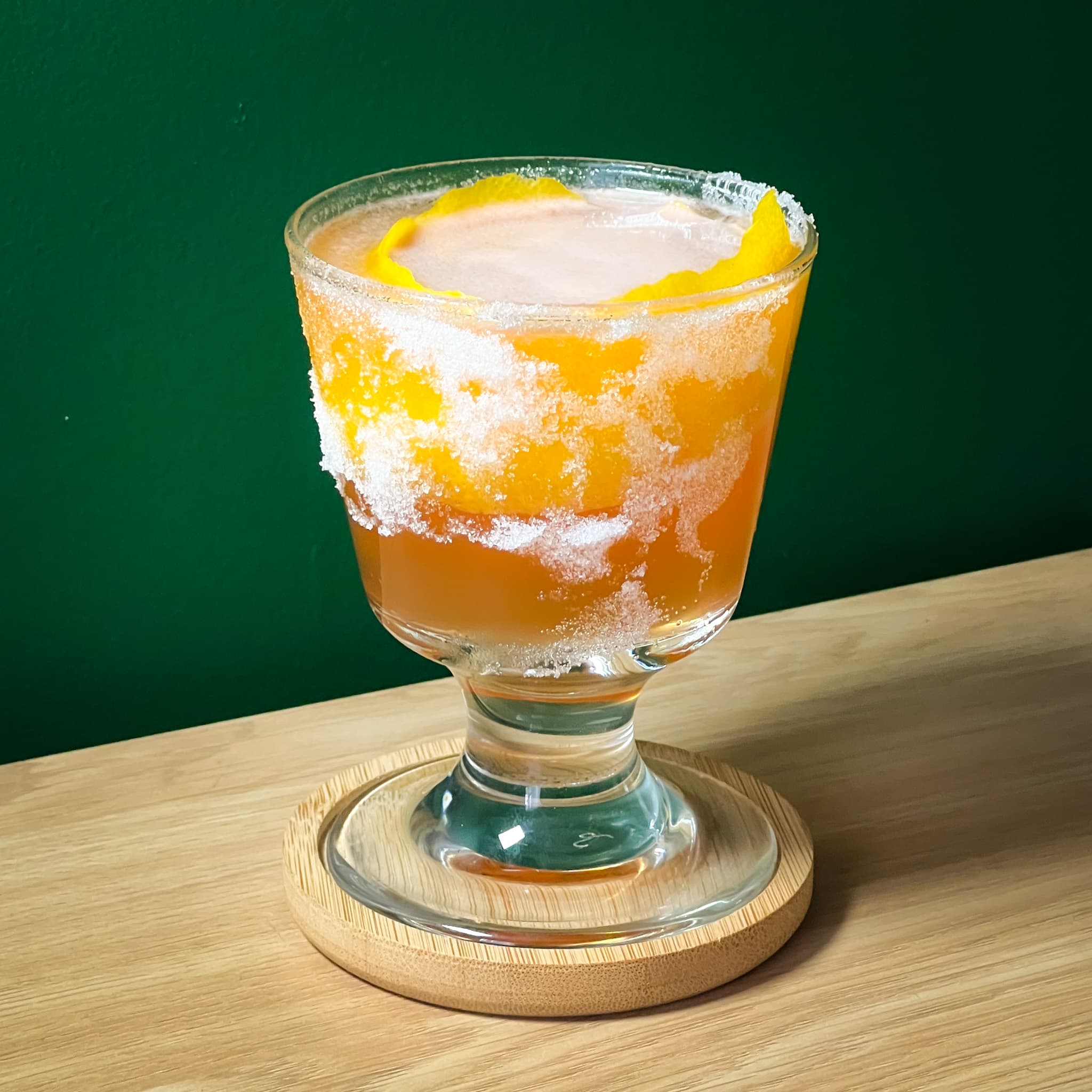
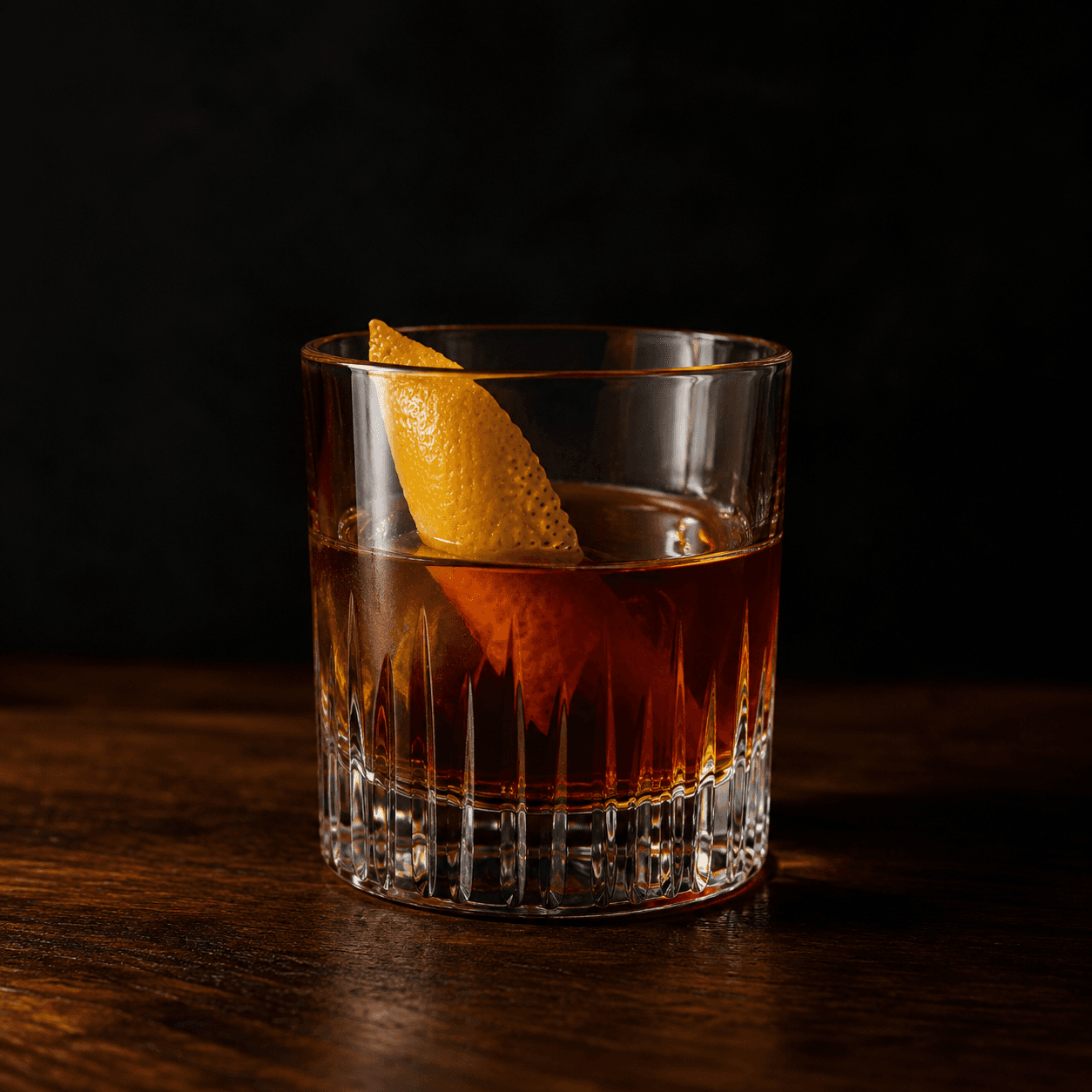
- Sugar-crusted rim and a long lemon peel
Make it well
Shaken, properly.
Rub a lemon around the of a rocks glass and dip it in sugar to crust the rim. Peel a long spiral of lemon peel and line the inside of the glass with it, this is the signature touch that gives the Crusta its name, take your time with it.
Add the cognac, curaçao, maraschino liqueur, syrup, lemon juice and to your with ice.
for 10-12 seconds.
into your prepared glass over a large ice cube.
On the palate
On the nose we get orchard fruit from the cognac and a big hit of orange oil off that lemon spiral. On tasting it's boozier than you'd expect from anything with lemon in it, the cognac well out in front and the citrus there to keep it honest rather than to make it a sour. Marzipan from the maraschino sits underneath. Then there's the sugared rim, which sounds like a garnish and isn't, you get a little hit of it on every single sip and the drink doesn't really work without it. Long and warm at the end. Take your time with this one.

Where it came from
The Brandy Crusta was created in the 1850s by Joseph Santini at the Jewel of the South, his bar at the New Orleans City Exchange. It was one of the city's first true "signature" cocktails, predating even the Sazerac, and its significance goes beyond just being an old drink: Santini's addition of lemon juice and a sugared, citrus-lined glass was new. Every sour that followed, the Sidecar, the Margarita, the whole family, traces back to this one. It was first written down in Jerry Thomas's 1862 Bartender's Guide, cementing Santini's creation in cocktail history. Exact specs have drifted a bit over the years, some historic versions swap the sweetener or drop the maraschino, but the sugared rim and lemon spiral have stayed constant throughout.
Keep pouring
If you like the Brandy Crusta, try these
The bartender’s note
One drink, one story, one bottle worth buying.
Thursday evening, so you have time to shop. No more than that.