Sazerac
A classic from New Orleans
- Method
- Stirred
- Style
- Classic
- Glass
- Gibraltar glass
- Time
- 5 min
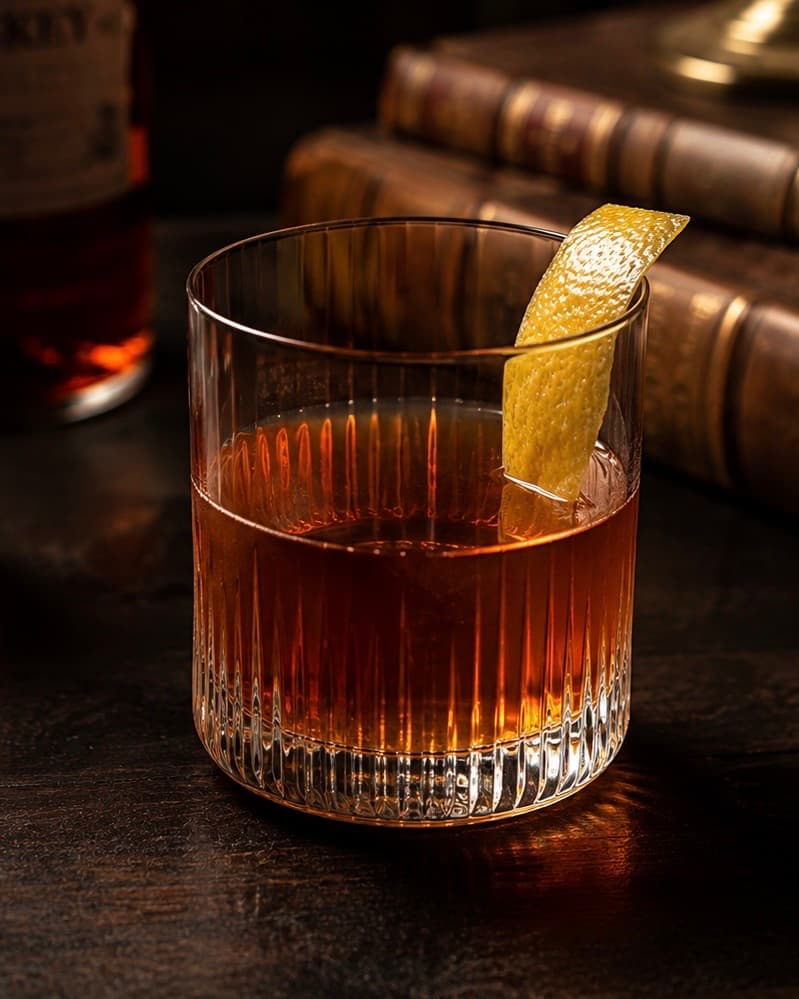
Ingredients
- 45mlRye Whiskey
No Rye Whiskey? Bourbon — rounder and sweeter — you lose rye's pepper, so the drink reads softer
- 22.5mlCognac
No Cognac? Brandy — a nice brandy does the job — whatever you love · Armagnac — rougher and more rustic than cognac, and all the better for it
- 7.5mlSimple Syrup, 1.5:1
No Simple Syrup? Demerara Syrup — richer, faintly molasses — adds colour and body, which most drinks welcome
- 3 dashesPeychaud's Bitters
- 1 dashAngostura
No Angostura? Old Fashioned Bitters — close to Ango, with the same spicy notes — just not the standard bottle
- a dashAbsintheoptional but great
- Garnish
- Lemon peel
Make it well
Stirred, properly.
This is a slow and strong sipper. We like it served ‘up’ so no ice in the drinking glass. Get your glassware chilling in the freezer long before you make this.
There’s no citrus in this so we’re , not shaking
Add all your ingredients, minus the absinthe into a
Add ice and stir for 30 seconds to chill
Add a small splash of absinthe to your drinking glass and swirl it around to coat the sides. Once coated, pour out the excess - it can easily overpower this drink. If you have a little spritzer bottle, 2-3 sprays will do it.
Pour the cocktail into your drinking glass.
For garnish, lemon peel is great, it over the top and rub the edge of the glass. Drop it in the glass if you like, or discard it
On the palate
On the nose it's light and fragrant but you do get the fruit and spice from the cognac and rye. On tasting it begins really sweet and light but quickly moves to the dry fruit and deep spices as the rye and syrup mix. The Peychaud's, absinthe and old fashioned bitters help to brighten it up. An outstanding cocktail.

Where it came from
The Sazerac is synonymous with New Orleans and is part of a family of cocktails with similar ingredients. In our view, the Sazerac is a great starting point before trying the Vieux Carre or La Louisiane - we'll cover those another day. The Sazerac is old, and the story everyone tells about it is older still. It goes like this: in 1838 a Creole apothecary named Antoine Peychaud, working out of his shop in the French Quarter, served brandy laced with his own bitters in an egg cup, a coquetier, and mangled French did the rest. Coquetier, cocktail. Lovely story. It just doesn't survive contact with a calendar, because Peychaud was born in 1803 and "cocktail" was already in print by 1806, when he was three years old. Nobody writes down a Sazerac cocktail anywhere until 1899. What is beyond doubt is that Peychaud made Peychaud's bitters, and they're still the one ingredient you can't fake here. The original Sazerac was made with Cognac, which was very popular in New Orleans at the time. It was served at the Sazerac Coffee House, which was actually a bar. It became very popular and was the signature New Orleans drink. But then, in the 1870s the Phylloxera epidemic swept Europe attacking its grape vines. This dramatically reduced the amount of Cognac available for export and New Orleans began to run out of the crucial spirit for its Sazeracs. To keep them on the menu, they began mixing Rye Whiskey in addition to and eventually in place of Cognac. Throughout the 1900s all the way to prohibition, this recipe became incredibly popular. This creates the debate we have today, is a true Sazerac cognac-based, rye whiskey-based or both? There are now multiple variations and names for a Sazerac that is rye-based or cognac-based. We'll cover our favourite here.
Keep pouring
If you like the Sazerac, try these
The bartender’s note
One drink, one story, one bottle worth buying.
Thursday evening, so you have time to shop. No more than that.