Mojito
Cuba's classic, shaken not muddled
- Method
- Shaken
- Style
- Classic
- Glass
- Collins glass
- Time
- 5 min
Ingredients
- 60mlLight RumReal McCoy 3 Year recommended
No Light Rum? Gold Rum — a little oak and caramel where light rum is clean — fine anywhere the drink isn't meant to be crisp
- 22.5mlLime Juice
- 15mlDemerara Syruprich, 2:1
No Demerara Syrup? Simple Syrup — clean sweetness with none of the molasses depth — fine in a sour, a real loss in a tiki drink
- —Mint10-12 leaves, plus a sprig for garnish
- —Soda Watertop up to taste
- Garnish
- Mint sprig
Make it well
Shaken, properly.
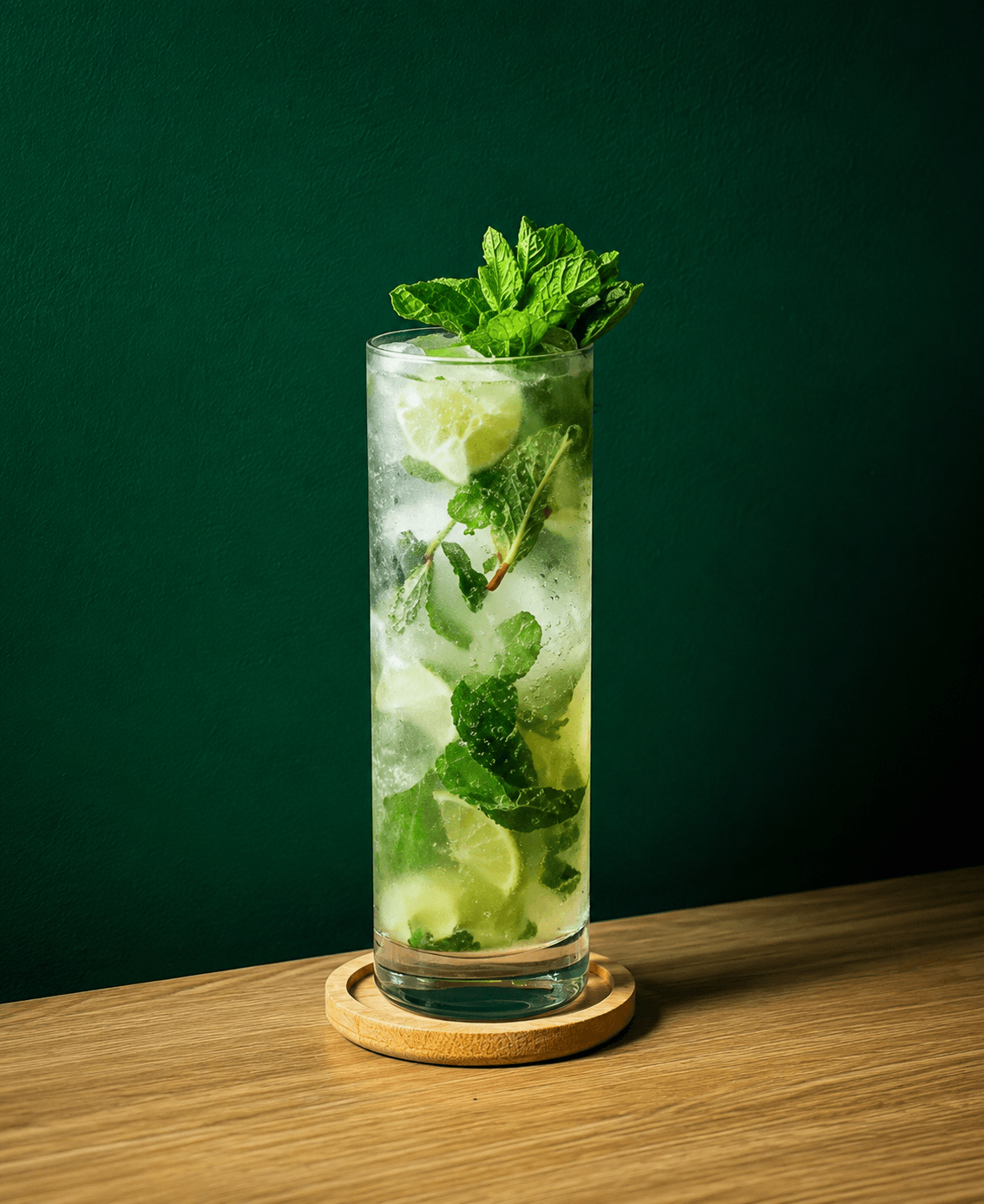
Add the rum, lime juice, syrup and mint leaves to your .
Add ice and for 8-10 seconds. Shaking disperses the mint through the whole drink far more evenly than it in the glass, and it's a lot quicker behind a busy bar too.
Strain into a highball glass filled with fresh ice.
Top with soda water and give it one gentle to bring it together.
Garnish with a mint sprig.
On the palate
On the nose it's bright lime and cool mint. On tasting, the shake really does spread the mint through every sip instead of leaving it sulking at the bottom of the glass. Rich demerara syrup gives you a rounder, faintly molasses-edged sweetness that plain sugar can't manage. The rum sits underneath, more felt than tasted, until a warm rummy note turns up on the finish under the fizz. Properly refreshing, and dangerously easy in the sun.

Where it came from
The Mojito's history is genuinely murky, and a lot of what gets repeated about it doesn't hold up. The most common story traces it to a 16th-century proto-drink called "El Draque," supposedly mixed by a cousin of the English privateer Sir Francis Drake using aguardiente, mint, sugar and lime. It's a good story, but there's no actual record of Drake, or his cousin, ever setting foot in Cuba, which makes the connection shaky at best. A more grounded account has the drink evolving through the early 20th century, with the Bacardi company's rise helping shift the base spirit from harsh aguardiente to rum, and the name settling into "Mojito" somewhere along the way, as described by Cuban writer Frederick Villoch in 1940. Some historians also credit American Prohibition-era tourism, and the Mint Julep it brought with it, as a bigger influence than any 16th-century pirate connection. What's certain is the drink is Cuban. Everything before that is best-guess history.
Keep pouring
If you like the Mojito, try these
The bartender’s note
One drink, one story, one bottle worth buying.
Thursday evening, so you have time to shop. No more than that.