Black Russian
Two ingredients, one ambassador
- Method
- Built
- Style
- Classic
- Glass
- Rocks glass
- Time
- 5 min
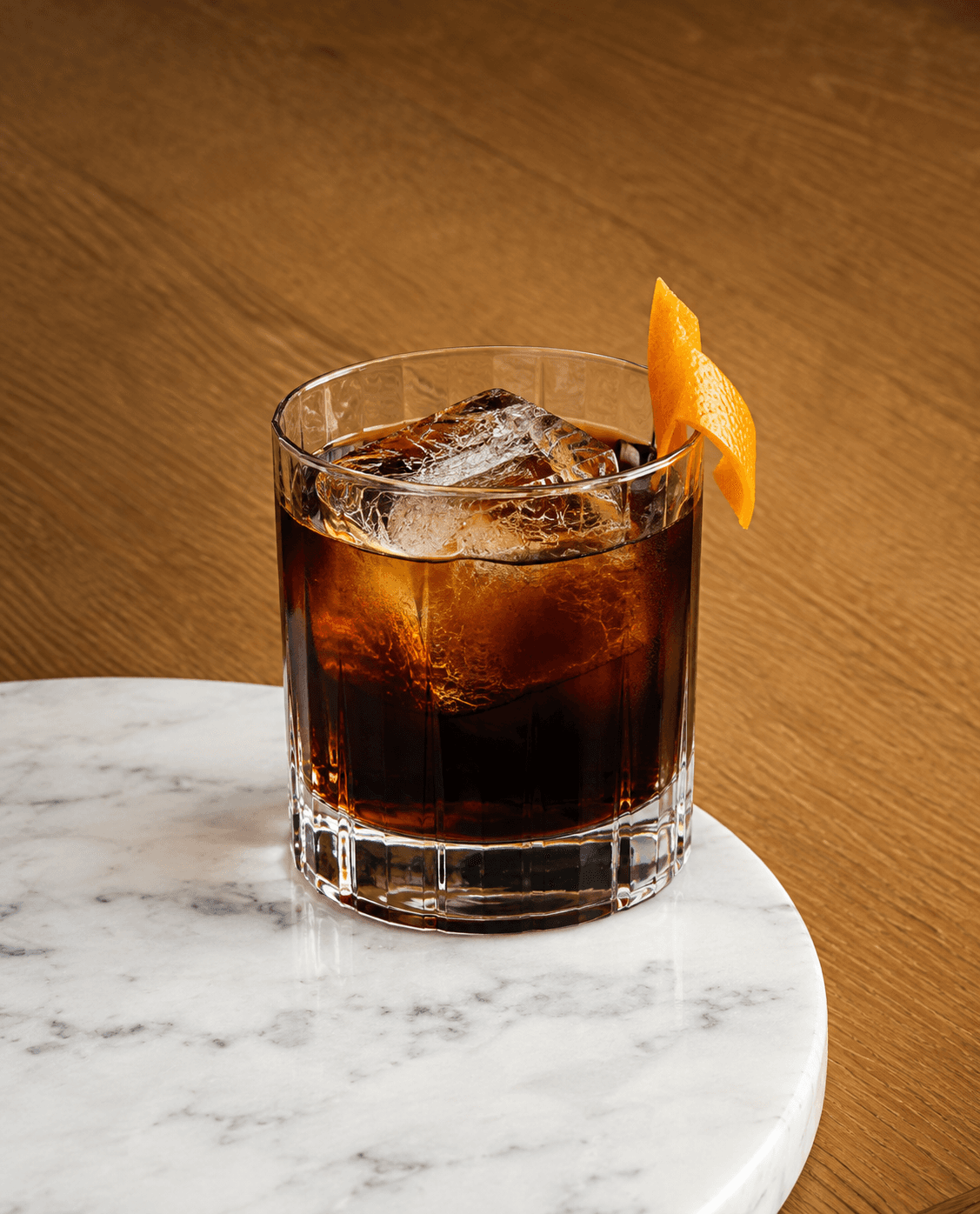
Make it well
Built, properly.
Fill a rocks glass with ice. if you have it, and this is a drink that genuinely benefits, there's nothing here to hide behind a bit of extra water.
Add the vodka and the coffee liqueur.
briefly, ten seconds, just to combine and chill.
That's it. Don't garnish it, it isn't that kind of drink.
On the palate
On the nose it's coffee and not much else, sweet and roasted, with the vodka only showing as a bit of heat behind it. On tasting it's sweeter than two ingredients has any right to be at the front, then the coffee turns bitter through the middle and the vodka arrives last, dry, cutting the sugar off before it gets sticky. The whole thing hangs on your coffee liqueur. A cheap one makes a cheap drink and there's nowhere for it to hide. This is a nightcap, not a session drink, and it's meant to be sipped slowly while the ice does its work.

Where it came from
The Black Russian was made in 1949 at the Hotel Metropole in Brussels, by a Belgian barman called Gustave Tops, for Perle Mesta, who was then the American ambassador to Luxembourg. That is unusually specific for a cocktail origin, and it holds up. There's a named bartender, a named bar, a named year and a named drinker, which puts it in a small minority of the drinks on this site. The name is doing Cold War work rather than describing anything. There is nothing Russian in it beyond the vodka, and the vodka in a Brussels hotel bar in 1949 was very unlikely to have been Russian either. Mesta, for what it's worth, was a Washington hostess famous enough that Irving Berlin wrote a musical about her. Being handed a cocktail in Brussels probably didn't make the top ten of her week.
Keep pouring
If you like the Black Russian, try these
The bartender’s note
One drink, one story, one bottle worth buying.
Thursday evening, so you have time to shop. No more than that.